Behind the Garfield Park Conservatory & Gardens is a dedicated network of people and partners working together to care for the gardens, support the community, and bring programs to life. The Conservatory & Gardens are supported by two organizations.
Garfield Park Conservatory Alliance (GPCA) – a non-profit that leads programming, education, visitor experience, and fundraising.
Chicago Park District (CPD) – owns and manages the facility and plant collection.
Our staff members differ in their expertise, from floriculturists and foremen to educators and accountants, but work together to provide the public and the surrounding community with innovative programs, a thriving collection, and educational opportunities year-round. Despite our separate organizations, we all work together to make the Garfield Park Conservatory & Gardens a destination for all Chicagoans and a resource for the immediate community.
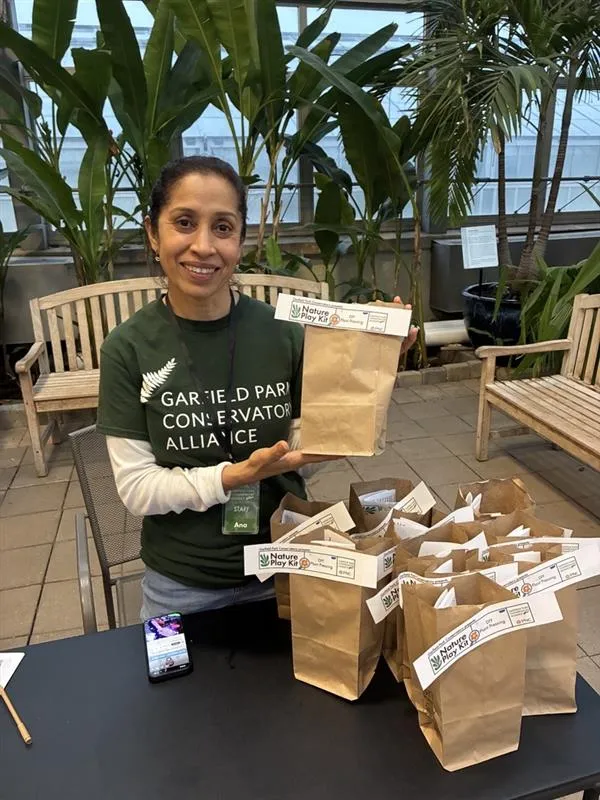
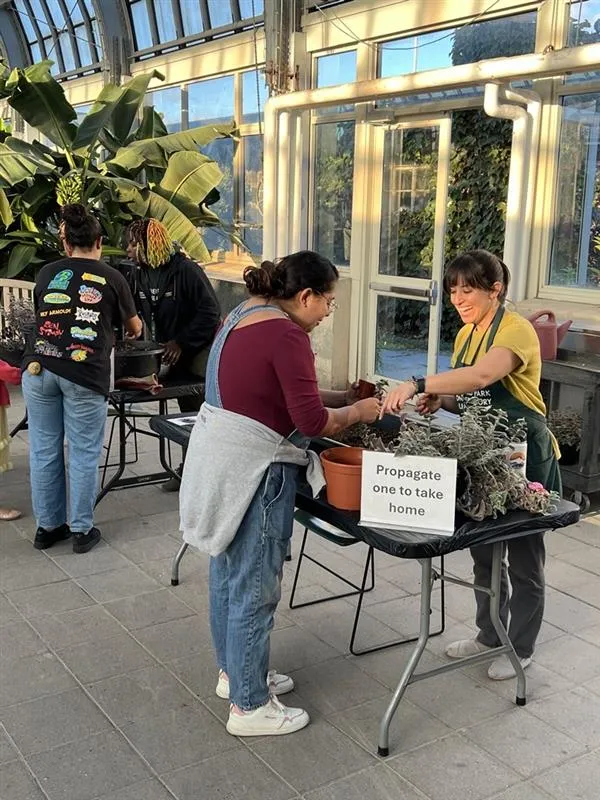
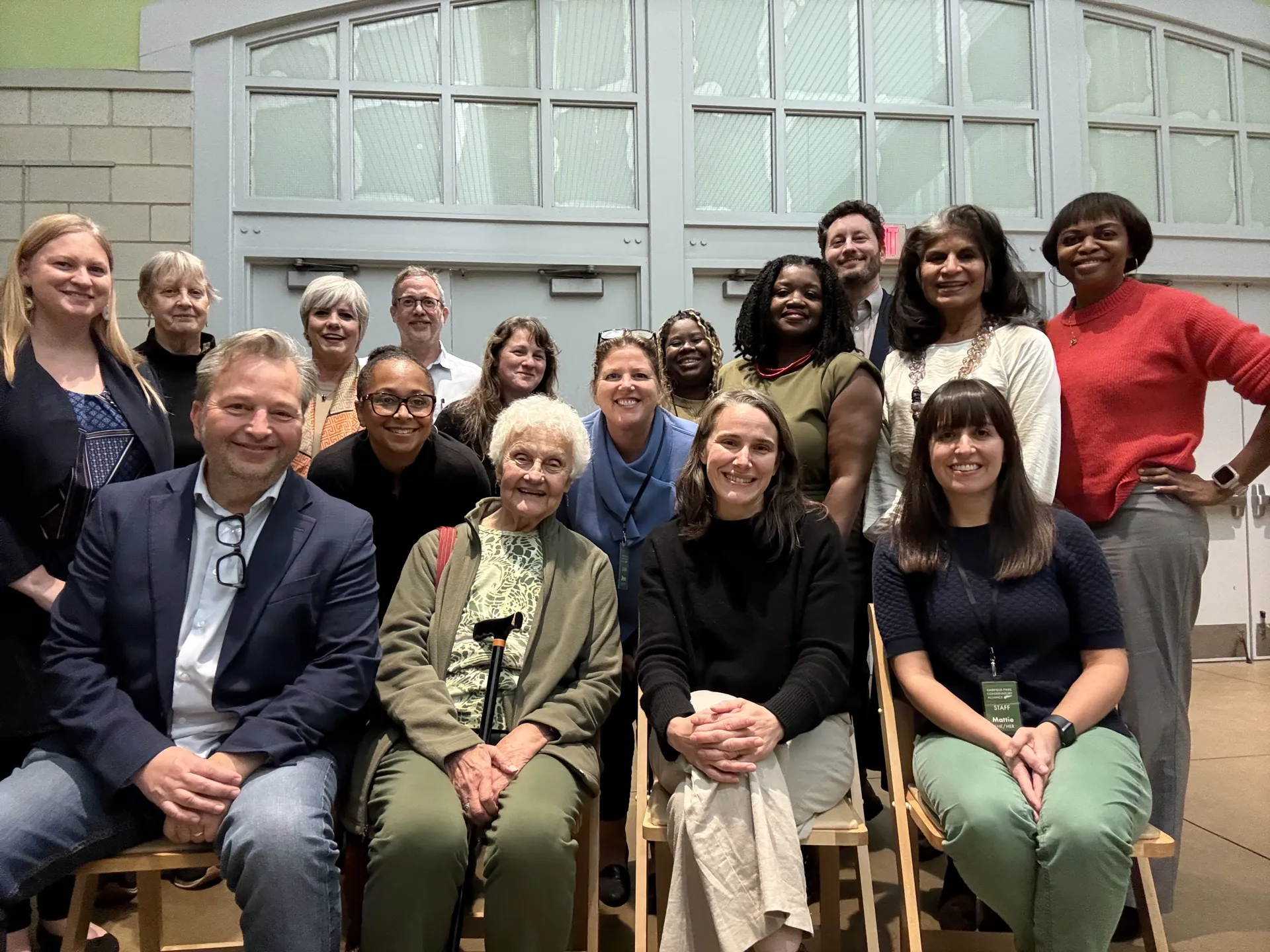
Garfield Park Conservatory & Gardens Staff
Our staff is committed to delivering innovative, hands-on programming that connects visitors to our collection and the natural world.
President & CEO
Jennifer Van Valkenburg
773-638-1766 ext. 12
[email protected]
Directors
Tonya Brooks
Director of Finance and Administration
[email protected]
Keta Glenn
Director of Nature Education
773-638-1766 ext. 30
[email protected]
Chris Oloroso
Director of Retail & Visitor Services
773-638-1766 ext. 21
[email protected]
Marie Stringer
Director of Development & Communications
773-638-1766 ext. 22
[email protected]
Mattie Wilson
Senior Director of Public Engagement
773-638-1766 ext. 16
[email protected]
Departments
Donor Services
[email protected]
Gift Shop
[email protected]
Group Visits
[email protected]
Membership Services
[email protected]
Partnerships
[email protected]
Visitor Services
[email protected]
Volunteer Program
[email protected]
The Chicago Park District manages the plant collection and the facility. Their primary focus is the health and well-being of our diverse plant collection and the maintenance of our 100+-year-old building and grounds.
Directors
Mary Eysenbach
Director of Conservatories
[email protected]
Matt Barrett
Deputy Director of Conservatories
[email protected]
Peter Vrotsos
Deputy Director of Horticulture
[email protected]
Staff
Joan Colon
Special Events Coordinator
[email protected]
Thomas Costanza
Foreman
[email protected]
For media and press inquiries, please contact [email protected].
Officers
John Harris, Chair
Mary Clare Bonaccorsi, Vice Chair
Peter Schlossman, Secretary
Kristin McLaurin, Treasurer
Members
David Bacon
Cornell Barnett
Cristina Vera Bridges
Jason Campbell
Wilonda Cannon
Amy Carnahan
Karishma Desouza
Elinor Escamilla
Paul Labonne
Gloria Materre
Reggie Moore
Mary Nelson
Diana Palomar
Andrew Spatafora
Erika Summers
Matthew Thacker
Kyle Welter
Amanda Williams
Ex-Officio
Cathy Breitenbach – Director of Cultural & Natural Resources, Chicago Park District
Mary Eysenbach – Director of Conservatories, Chicago Park District
Jennifer Van Valkenburg – President & CEO, Garfield Park Conservatory Alliance
Honorary
Teresa M. Alvarez
Levette Haynes
Paul Levy*
Alan Lindquist
Jacqueline McKay
Margo Morris
Dr. Gwendolyn Rogers*
Karen Seamen
John A. Shea*
Scott Sonoc
Gail Thompson
*Deceased
The Garfield Park Community Council works together with community stakeholders and members to provide opportunities and programs that help build a vital Garfield Park community. The GPCC’s goals focus on renewing the community’s commercial corridors, spurring new housing investment, addressing public safety and wellness, and building connections between neighbors. You can find information about their mission and staff contact on their website.
Early Beginnings
The Garfield Park Conservatory in Chicago, Illinois is one of the largest and most stunning conservatories in the nation. Often referred to as “landscape art under glass,” the Garfield Park Conservatory occupies two acres of public greenhouse space and 10 acres of outdoor gardens. Garfield Park Conservatory is located in Garfield Park — an 184-acre site located on Chicago’s redeveloping Westside designed as a pleasure ground by William LeBaron Jenney — serving as the centerpiece of the three great original Westside parks (Humboldt, Garfield, and Douglas).
The Conservatory Through Time
In the late 19th century, each of the three large West side parks had its own small conservatory and propagation greenhouses. After 20 years of use, these conservatories had fallen into disrepair and administrators believed it redundant to show similar plant collections in three facilities located within close proximity of each other.
In 1905 Chicago’s West Park Commission’s general superintendent and chief landscape architect, Jens Jensen, demolished the three smaller greenhouses in Humboldt, Douglas and Garfield Parks to create what was intended as “the largest publicly owned conservatory under one roof in the world” in Garfield Park. Many of the original plantings came from the three earlier conservatories.
Constructed between 1906 and 1907, and opened to the public in 1908, the Garfield Park Conservatory was designed by Jensen in collaboration with Prairie School architects Schmidt, Garden and Martin and the New York engineering firm of Hitchings and Company. It represented a unique collaboration of a prominent landscape architect with architects and engineers.
Jensen conceived the Conservatory as a series of naturalistic landscapes under glass, a revolutionary idea at the time. The simple yet strong shape of the structure, which is meant to emulate the haystacks of the Midwest, complements the collection of plants and foliage that it houses.
Located in the midst of historic Garfield Park on Chicago’s West Side, the Garfield Park Conservatory is one of Chicago’s best kept secrets and one of the nation’s botanical treasures. It ranks among Chicago’s most unique sites, attracting visitors from a variety of cultures, disciplines and interests.
Both Garfield Park and its conservatory are listed on the National Register of Historic Places. Over the years the Conservatory has been recognized as an internationally significant horticultural facility as well as a cultural asset to the surrounding community and the city of Chicago.
This text is excerpted in part from Inspired by Nature: The Garfield Park Conservatory and Chicago’s West Side, by Julia S. Bacharach and Jo Ann Nathan. (top photo) Garfield Park Conservatory Fern Room, 1908, Courtesy of Chicago Park District Special Collections.
The Seed that Started the Alliance
Following a devastating cold spell in the winter of 1994 which injured a significant portion of the aroid collection, the Chicago Park District convened a task force of representatives from various community, education, and environmental organizations. For six months, eighty individuals participated in the development of a plan to revitalize the Conservatory through new programs, visitor services, marketing and fundraising.
These activities would be carried out by a newly formed Alliance, a partnership of organizations which included the Chicago Park District, Friends of the Parks, and area schools, museums, conservation organizations and community groups.
The plan was subsequently funded by Lila-Wallace Reader’s Digest Fund’s Urban Parks Initiative which awarded a $1.46 million challenge grant. The grant required a one to one match, at least 60% of which must come from private funds. The Chicago Park District committed to the full 40% public sector match.
2011 Hailstorm
The Garfield Park Conservatory sustained catastrophic damage in the June 30, 2011 hailstorm, shattering approximately half of the glass panes in the roofs of the historic Fern Room, Show House, and ten propagation greenhouses. The glass panes in the Desert House also sustained significant damage. The pathways, ponds and plants in the Fern Room, Show House, Desert House and propagation houses were covered with broken glass, and shards of glass hung dangerously from the roofs.
The broken glass was removed, and the roofs of the damaged display houses were covered with temporary poly-carbonate sheeting to keep the plants protected and keep the environment inside the rooms steady until permanent glass could be installed. Extensive construction was needed to recreate the permanent roofs of these rooms. The damaged propagation greenhouses were repaired during the summer of 2012. The Show House repair was completed in July 2014. The Fern Room and Desert House were the last to be completed in early 2015.
The Alliance and Park District celebrated the Grand Re-Opening with a large, free event featuring nature-based activities and exhilarating performances on Earth Day in 2015.
Today
Today, the institution is known as Garfield Park Conservatory & Gardens to remind visitors that in addition to the beloved gardens inside the Conservatory, the 10 acres of outdoor gardens offer an ever-changing experience and exemplify our dedication to showcasing nature year-round.
Today, we welcome more than 200,000 visitors annually. A recent surge of growth and revitalization has resulted in new amenities including the reimagined EMG Children’s Garden, renovation of the Lobby to accommodate the growth and diversity of our visitorship, and the Child Wild Exploration Garden (opening fall 2026).
Our mission remains the same: change lives through the power of nature. We strive to achieve that mission through the lens of becoming the most inclusive campus for nature education in the US. We are so glad you are here.