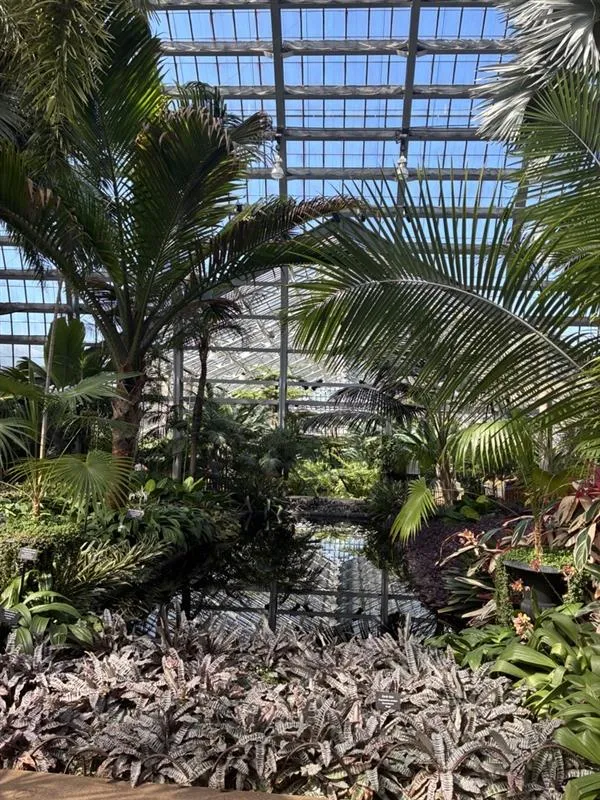
Palm House
At 65 ft high and 90 ft wide, this is the largest room in the Conservatory. It is designed as an idealized tropical landscape, featuring more than 70 graceful palms, as well as other plants from warm habitats all around the world.
Fern Room
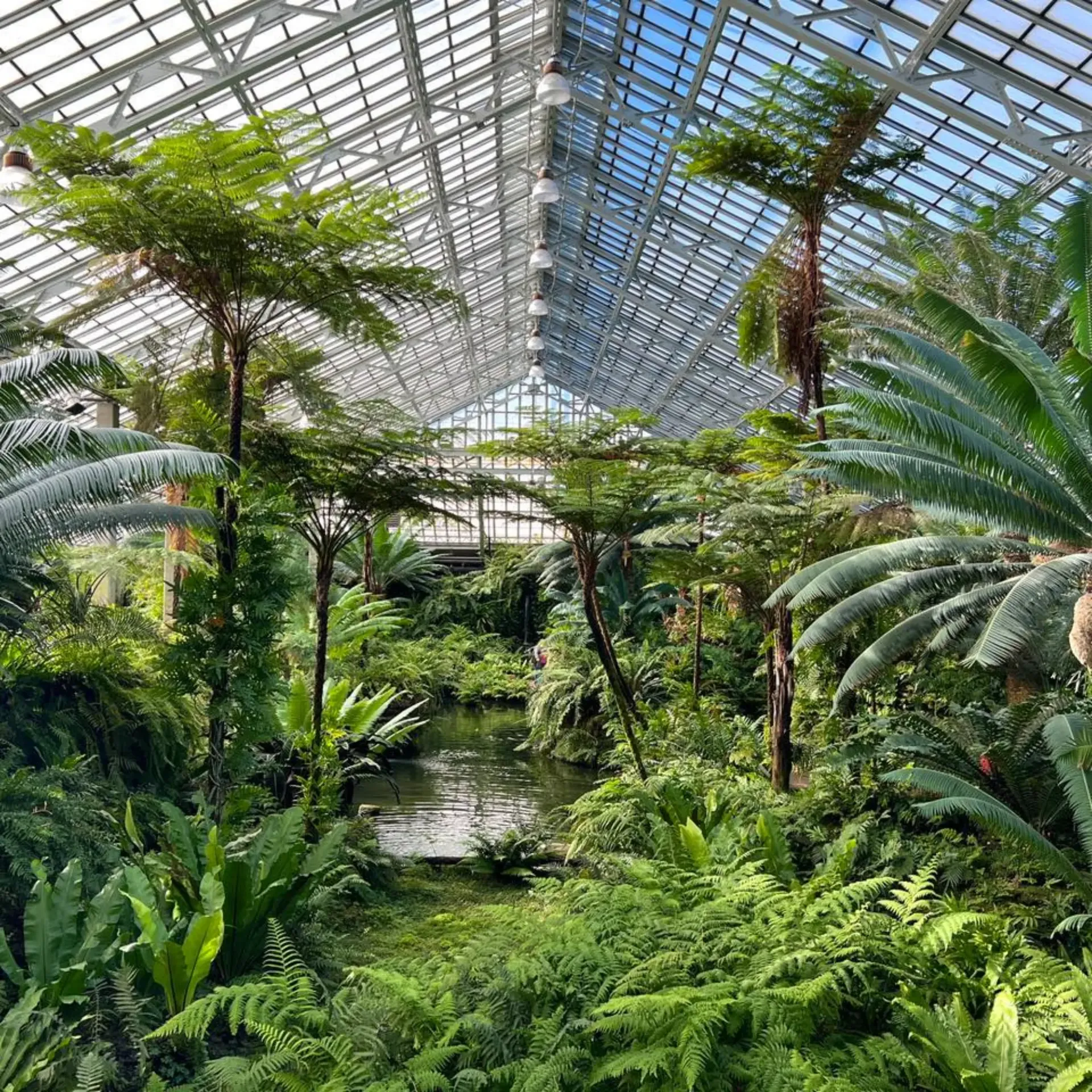
Jens Jensen, who designed the Conservatory in 1906, wanted to give visitors a glimpse of what Illinois might have looked like millions of years ago. Lush ferns, rocky outcroppings and an indoor lagoon evoke the swampy landscape of prehistoric Chicago. The Fern House is home to the cycads: ancient cone-bearing plants, ferns and fern allies (plants that thrive in similar conditions and emerged around the same time as ferns, like mosses and liverworts). Many of these plants are considered primitive plants, or members of plant groups that grew during the age of the dinosaurs, about 300 million years ago.
Sugar From the Sun
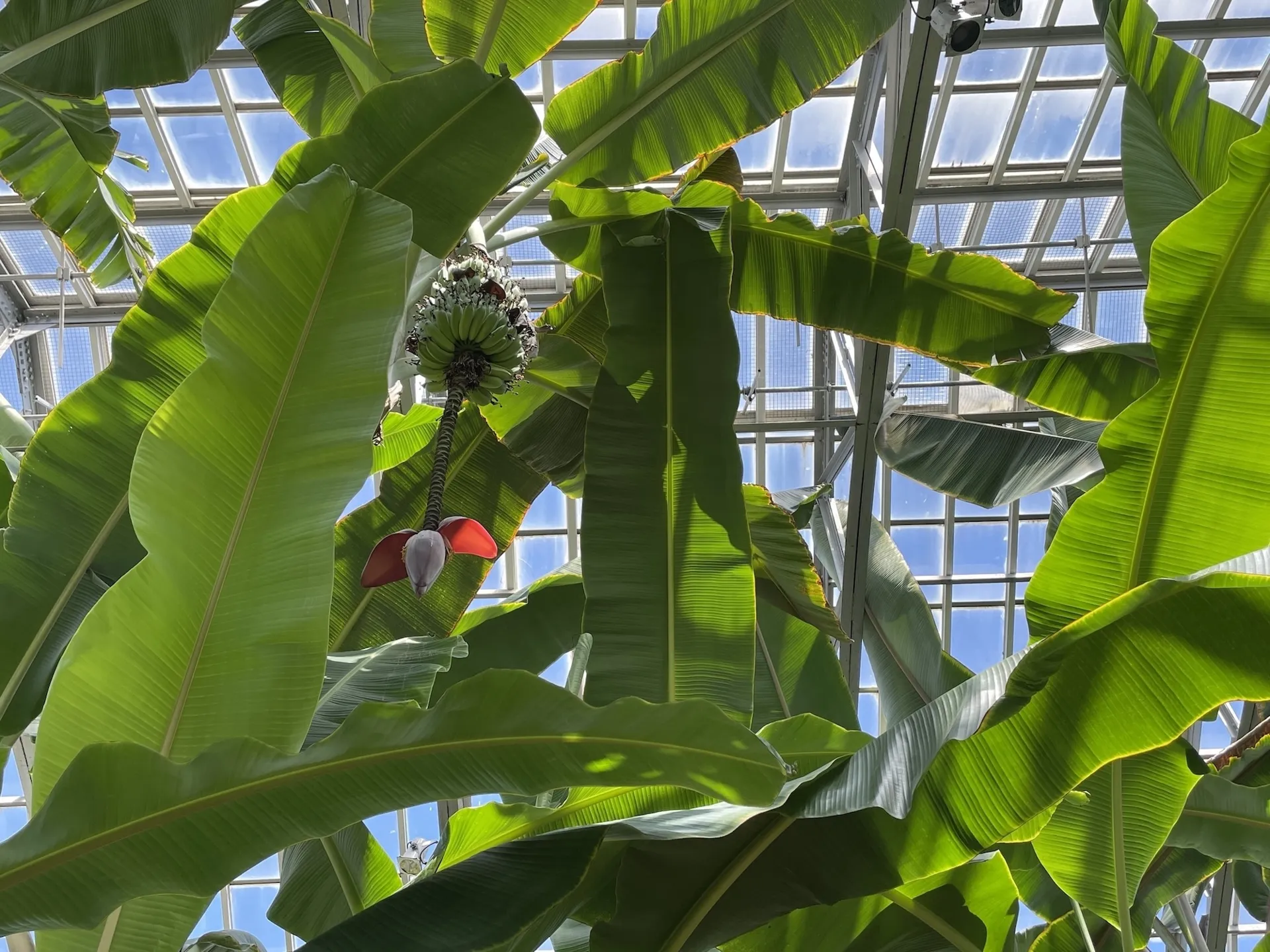
Four themed botanical environments – water, air, sunlight, and sugar – help visitors discover how right now, inside every leaf, plants are capturing sunlight and using it to change small parts of air and water into sugar – the energy that sustains life on Earth. This is the story of photosynthesis, the process whereby plants use sunlight energy to change water and carbon dioxide from the air into sugar, or fuel, for their own survival as well as the survival of all other living things. Since plants are the only living things that can photosynthesize, all living things depend on their ability to make their own food and pass that energy along the food chain.
Desert House
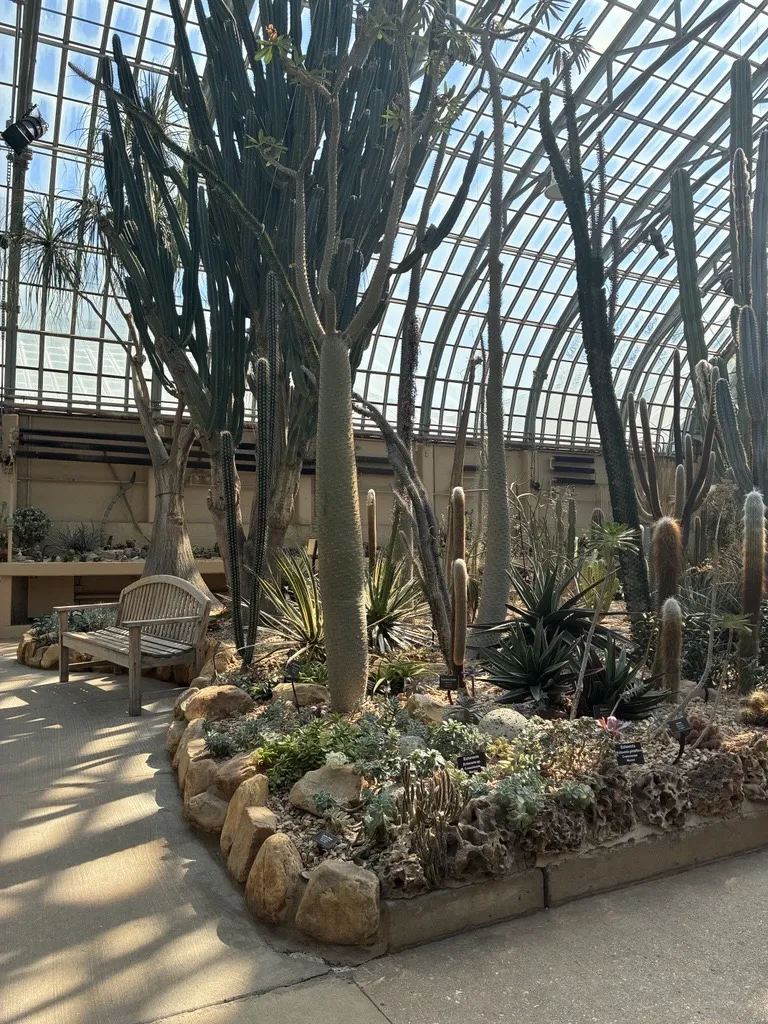
The Desert House holds one of the region’s most varied collections of cacti and succulents. These plants owe their popularity to their spectacular and unique forms, the promise of brilliant, short-lived flowers and their ability to withstand harsh, dry conditions. The size of the plants in this room varies from the tiny living stone plant to the large century plants.
Most of the plants in this room are succulents, which means they are adapted to retain water, thus having the ability to survive long periods of drought conditions. Some succulents store water in their roots, others in their stems or leaves. Although the plants here share an adaptation to a desert environment, this room does not reflect a real desert. There are plants in this room from Africa, Asia, the Americas and all over the world that, in nature, would not be growing side-by-side or within such close proximity to one another.
Aroid House
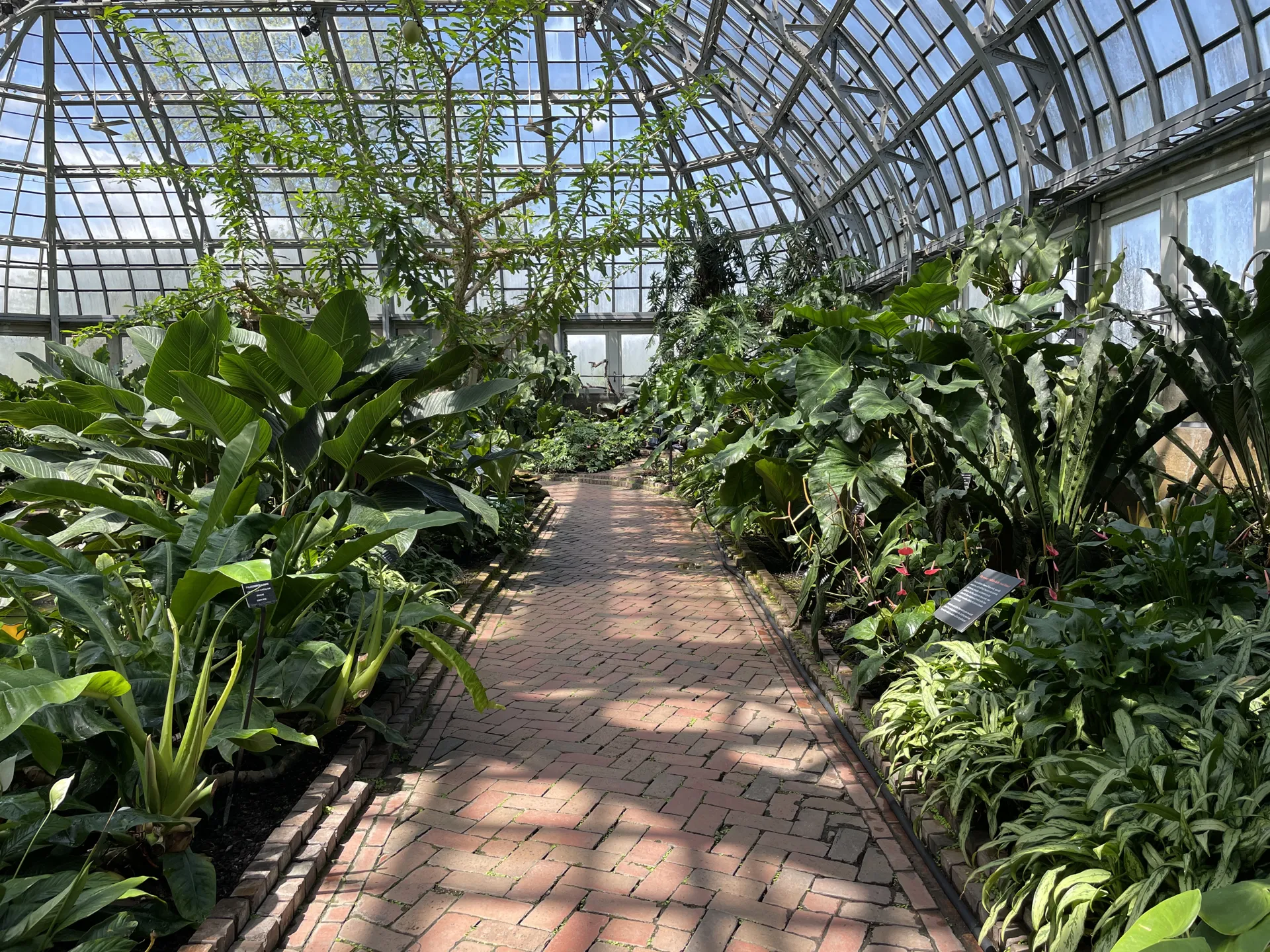
Houseplants gone wild! Indoor gardeners are sure to find something familiar here, as many aroids are popular houseplants.
Aroid refers to a certain type of flower structure made up of a modified leaf (spathe) and a stalk of tiny flowers (spadix). The reason why many aroids find their way into our homes and indoor spaces is because they are particularly tolerant of low light. You can see evidence of their adaptation to low light by looking at their leaves. Large, often arrow-shaped leaves capture additional sunlight. You may also find that the undersides of an aroid plant’s leaves are darker than the tops, indicating that the dark underside reflects light back up to the top portion of other leaves. Many of the low-growing plants in this room are the ones that, in the wild, would be found growing on the floor of a rainforest- a place that receives very little sunlight.
Show House
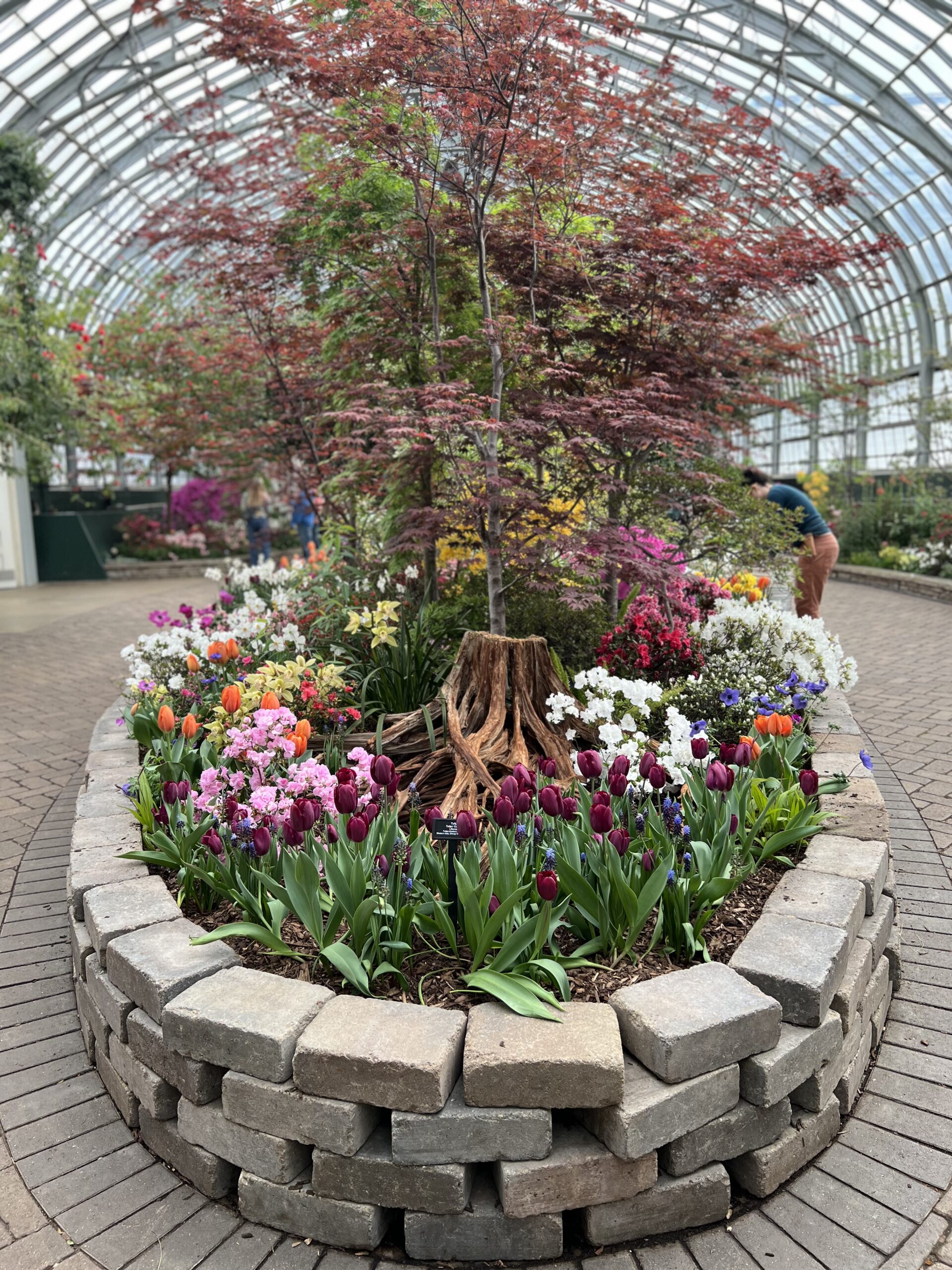
This room is the site of spectacular flower shows each year. Much of the plant material displayed in the shows is grown at the Conservatory. The original 1908 layout of the room was restored following the 2011 hailstorm, and includes the large central ellipse that was designed as the feature display for annual flower shows- the Winter Holiday Show and the Spring Flower Show.
Once the roof was completed, the Chicago Park District redesigned the space to bring it back to Jensen’s original design. This includes a large open space in the middle, with a designated tiled ellipse in the center of the room as an optional center flower bed. During flower shows this space is filled and during the summer it is left open to accommodate weddings and other special events.
Horticulture Hall
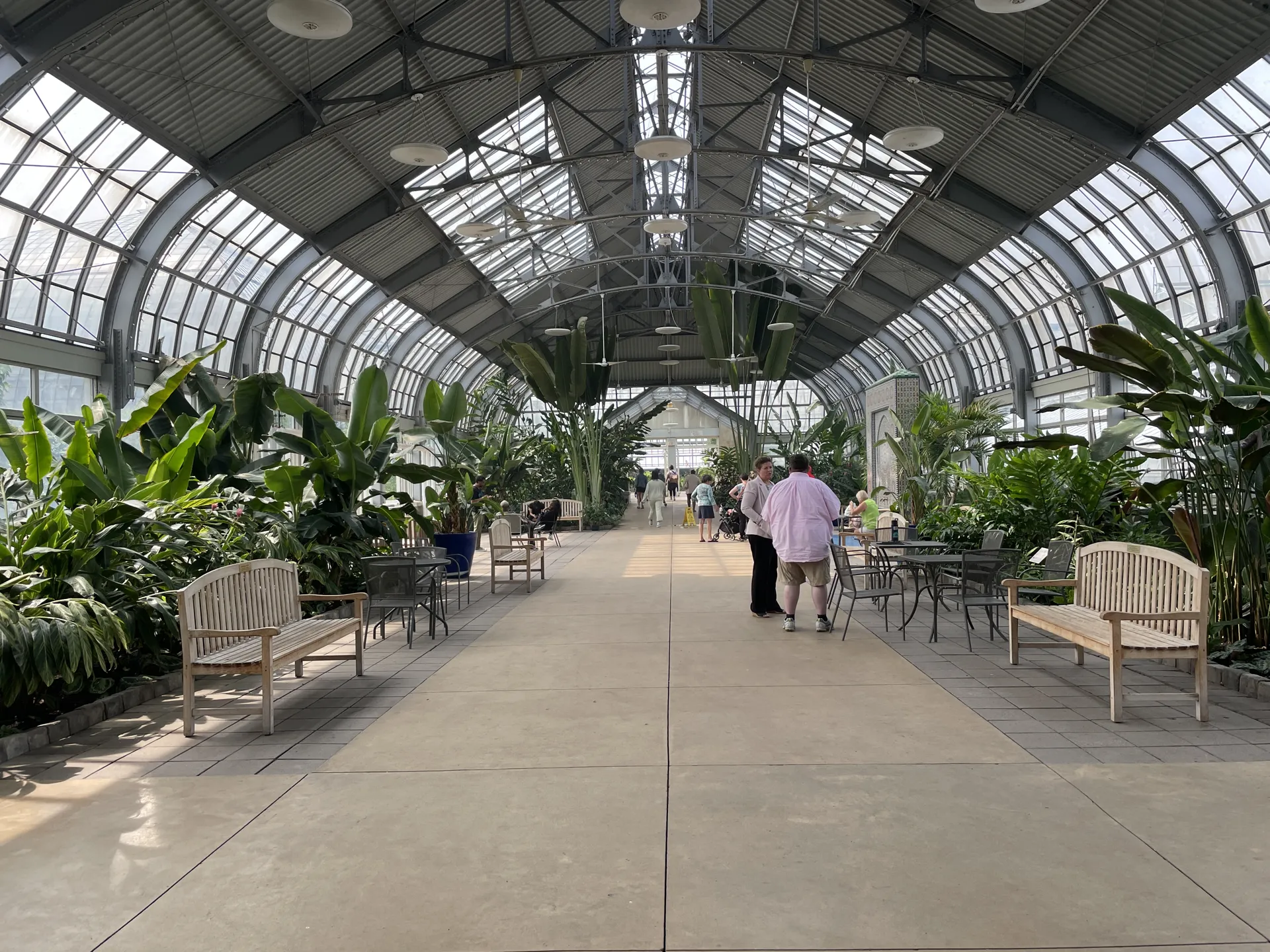
Named one of Chicago’s top ten event venues, this public space sparkles with festive flowers and greenery. This room houses bistro tables for the public to sit and enjoy the greenery around them or have a snack. After hours, the room can be transformed into an amazing setting for weddings, corporate receptions, or performance space.
Elizabeth Morse Genius Children’s Garden
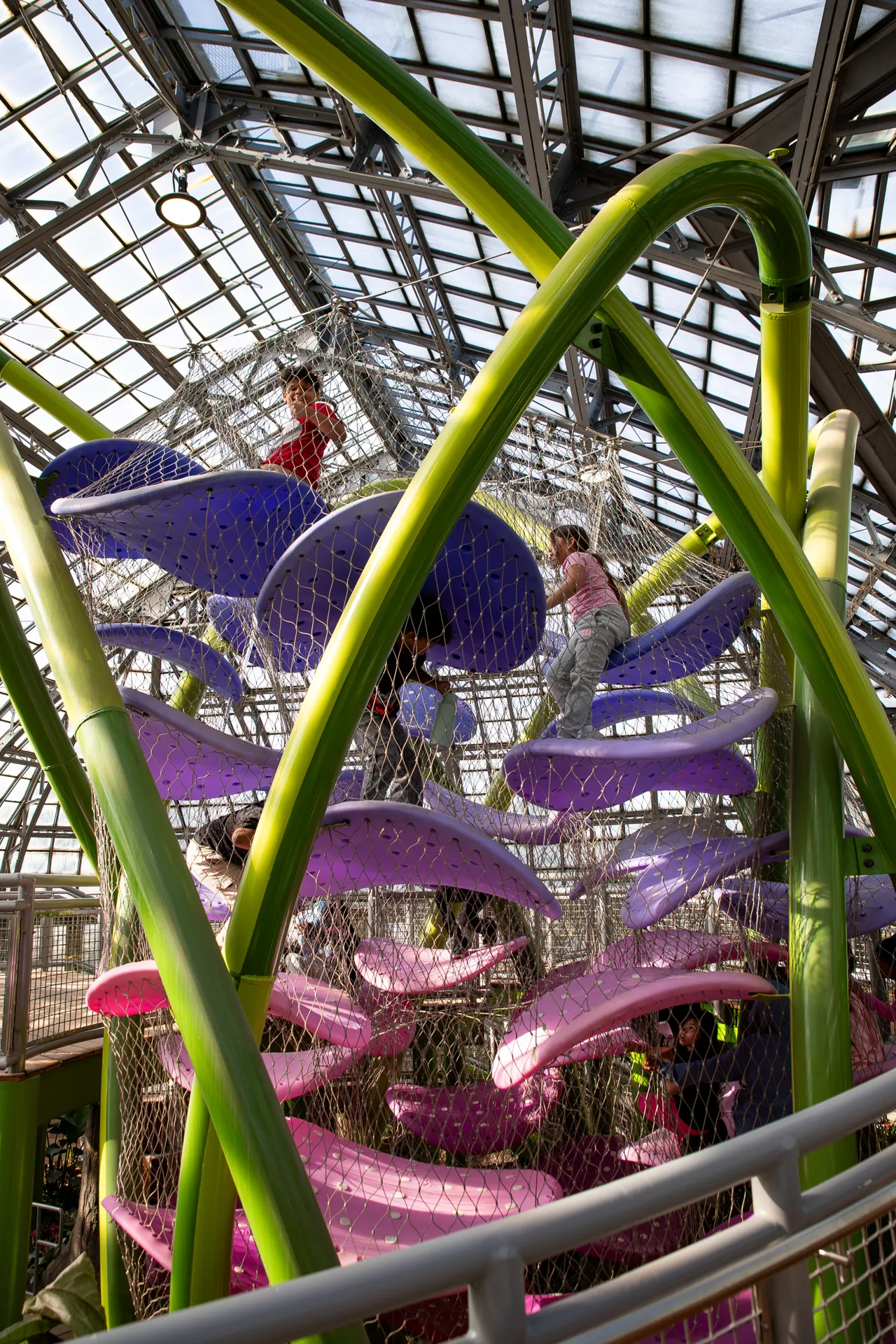
The reimagined Elizabeth Morse Genius (EMG) Children’s Garden invites families to experience the magic of nature in every season. This innovative 6,000-square-foot garden blends play, science and imagination to offer free, accessible opportunities for exploration, discovery and joy in nature — no matter the weather.
The EMG Children’s Garden has ADA accessible features, including a wheelchair-accessible spiral ramp, a dedicated sensory-friendly area and inclusive design elements that ensure every child can experience the joy and wonder of nature.
This garden was made possible by a generous contribution from the Elizabeth Morse Genius Charitable Trust.
For more questions, please contact Jennifer Van Valkenburg at Garfield Park Conservatory, 773-638-1766 ext. 12 or [email protected]